What That Noise From Your Garage Door Is Actually Telling You
Edinburg homes built between 1984 and 2005 share the same aging opener parts and heat-stressed hardware.
Read moreBlogEdinburg, TX · 5 min read
Edinburg homes built 1984-2005 run aging openers through brutal summer heat. Here's how that combination fails and what actually fixes it, from Edinburg Garage Door Pros.
Local detail
Most of the openers we find on service calls went in sometime between 1984 and 2005 - that's the window when this stretch of Hidalgo County, across the 38 named areas we work in, saw its heaviest home building, with a median build year around 1996. That matters because an opener installed in 1994 is not the same animal as one installed last year. The logic board, the capacitor, the limit switches - all of it is older tech, and it's been sitting in a hot garage for two to three decades.
The heat is the other half of this. Edinburg sits in a severe-heat climate band, and a garage with a metal door and a south or west exposure can run well past the outside air temperature by mid-afternoon. Electronics don't love that. Capacitors dry out faster, circuit boards warp faster, and the motor has to work harder to lift a door that's expanded slightly in its tracks. None of this is dramatic - it's slow, cumulative stress that shows up as an opener that used to run smooth now straining, humming, or reversing for no clear reason.
Put those two things together - a housing stock that's mostly 20 to 40 years old, sitting through summer after summer of serious heat - and you get a predictable failure pattern we see over and over on this side of the Valley.
The area
Two separate issues tend to collide at the same house: an aging opener and a power interruption. Many openers from the 1984-2005 build era have no battery backup at all - if the power drops, the door is stuck wherever it was when the lights went out. No remote, no wall button, nothing works until power is restored or someone pulls the manual release cord.
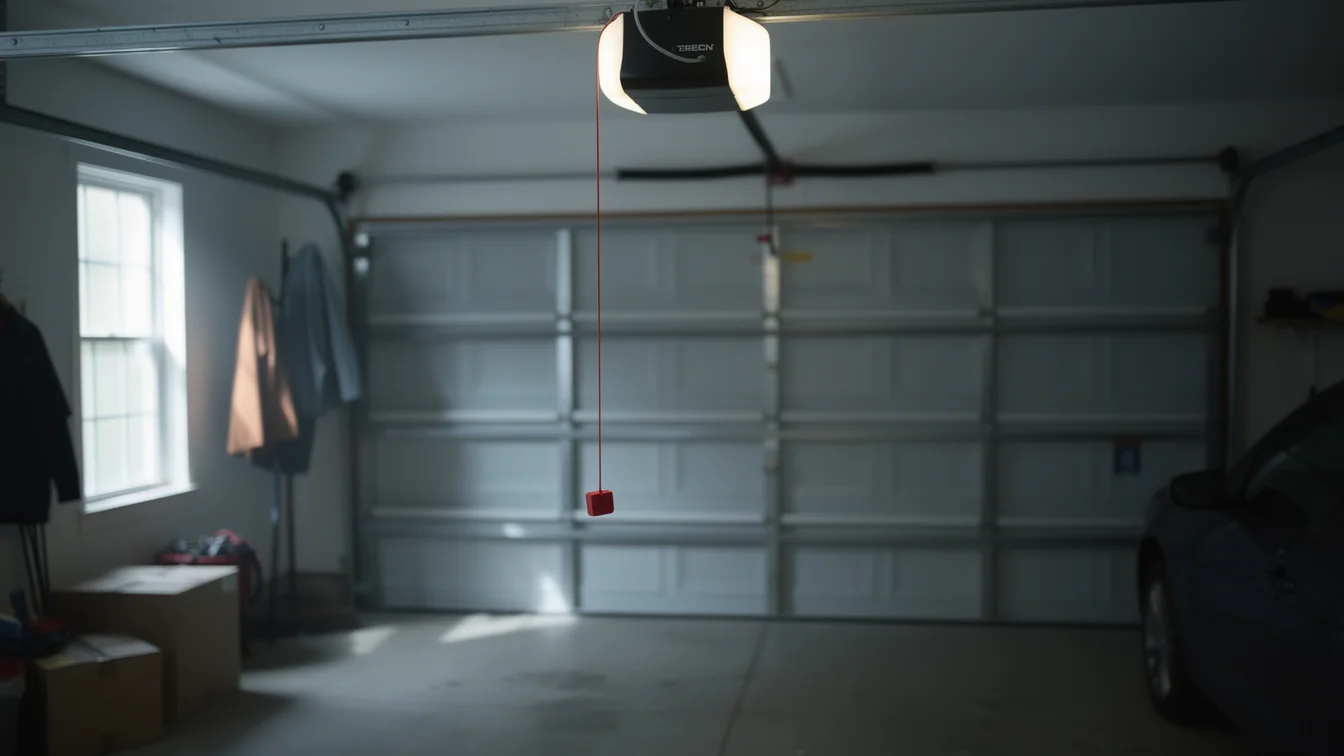
The manual release is the part people forget about until they need it. It disconnects the trolley from the opener carriage so you can lift the door by hand. It's standard equipment on every opener built in that era, but a lot of owners have never touched it and don't know where it is or how much force it takes to lift a door built for motor assist.
Heat makes the electrical side worse. A logic board that's already stressed by years of attic-level garage temperatures is more likely to lock up or fail outright right when a breaker trips or the grid hiccups, rather than recovering cleanly once power comes back. We've opened up more than one board from this era that looks fine until you check the solder joints under magnification - heat cycling over 20-plus years cracks them slowly, and a power cut is often just the final straw, not the actual cause.
What we find
If your door won't respond to the remote or wall button after a power cut, try the manual release and lift the door by hand first - that tells you whether the problem is the opener or something mechanical like a broken spring. If the door moves fine by hand but the opener still won't fire up once power's back, that's a board or motor issue, not a wiring fluke.
Call sooner rather than later if you're hearing a buzz or hum with no movement, if the opener light flickers on reset but nothing else responds, or if this is the second or third time this year the unit has needed a reset after an outage. Repeated resets on an original-era opener usually mean the board is failing, not recovering.
Here's the honest limitation: if your opener is an original unit from the 1984-2005 build wave, exact replacement boards are often discontinued. We can sometimes source a compatible board, but more often the straight answer is a full opener swap rather than a board repair - chasing parts for a 25-year-old logic board can take longer than just replacing the unit, and we'll tell you that up front instead of stringing out a repair that won't hold.
How we work
We don't have a posted price list here, because the real cost depends on what's actually failed - a board, a capacitor, the motor itself, or just a reset after a power cut with no damage at all. What we can tell you is how the decision tends to shake out across this service area.
With 56,269 owner-occupied houses here and a median household income of $46,544, most owners we talk to want a straight answer on repair-versus-replace before they commit to either. For an opener from the 1984-2005 era, a simple reset or sensor fix costs a lot less than sourcing an obsolete board, and sourcing an obsolete board often costs close to what a new opener with battery backup runs. That backup feature matters more here than in a mild climate, since a stuck-open or stuck-shut door during a summer power cut isn't just an inconvenience - it's a security gap or a heat problem depending on which way the door was sitting.
If you're in Lopezville, Doolittle, or anywhere closer in, a quick look at the unit tells us which category you're in before any work starts.
Questions
Heat cycling over years of summers in a hot garage stresses the solder joints and capacitors on the opener's logic board. The board can be close to failing already, and a power cut is often what finally tips it over, even though the outage itself didn't cause the underlying wear.
If your opener dates from the 1984-2005 building era common in this area, probably not - battery backup wasn't standard equipment on most residential openers from that time. Check for a small battery compartment on the opener head unit; if it's not there, a power cut means manual release only.
Sometimes we can source a compatible board, but exact replacement boards for openers from that era are often discontinued. Honestly, a full opener swap is frequently faster and more reliable than chasing obsolete parts, and we'll tell you which makes sense once we've looked at your unit.
Pull the manual release cord hanging from the trolley on the opener rail - it disconnects the door from the motor so you can lift it yourself. It takes more effort than you'd expect on a heavier door, so brace for that before you pull it.
Recommendation
More garage door guides for Edinburg homeowners.
Edinburg homes built between 1984 and 2005 share the same aging opener parts and heat-stressed hardware.
Read more
Most Edinburg homes went up between 1984 and 2005, before insulation requirements reached garage doors.
Read more
A look at what Edinburg Garage Door Pros actually checks on a service call, built around this town's 1984-2005 housing stock and severe heat climate band.
Read moreReady when you are
Edinburg Garage Door Pros repairs and installs garage doors, springs and openers in Edinburg, TX and the surrounding area.